

Since last week, there has been pandemonium in the airports across India. Indigo, the largest carrier in India, cancelled hundreds of flights. This peaked on Friday at 1000 flights cancelled. To put that in perspective - On an average day, there are about 3000 - 3100 domestic flights that take off in India.
Why the cancellation?
A new directive from the Directorate General of Civil Aviation (DGCA) came into effect regarding Flight Duty Time Limitations (FDTL), which directed airlines to provide rest to flight crew, specifically -
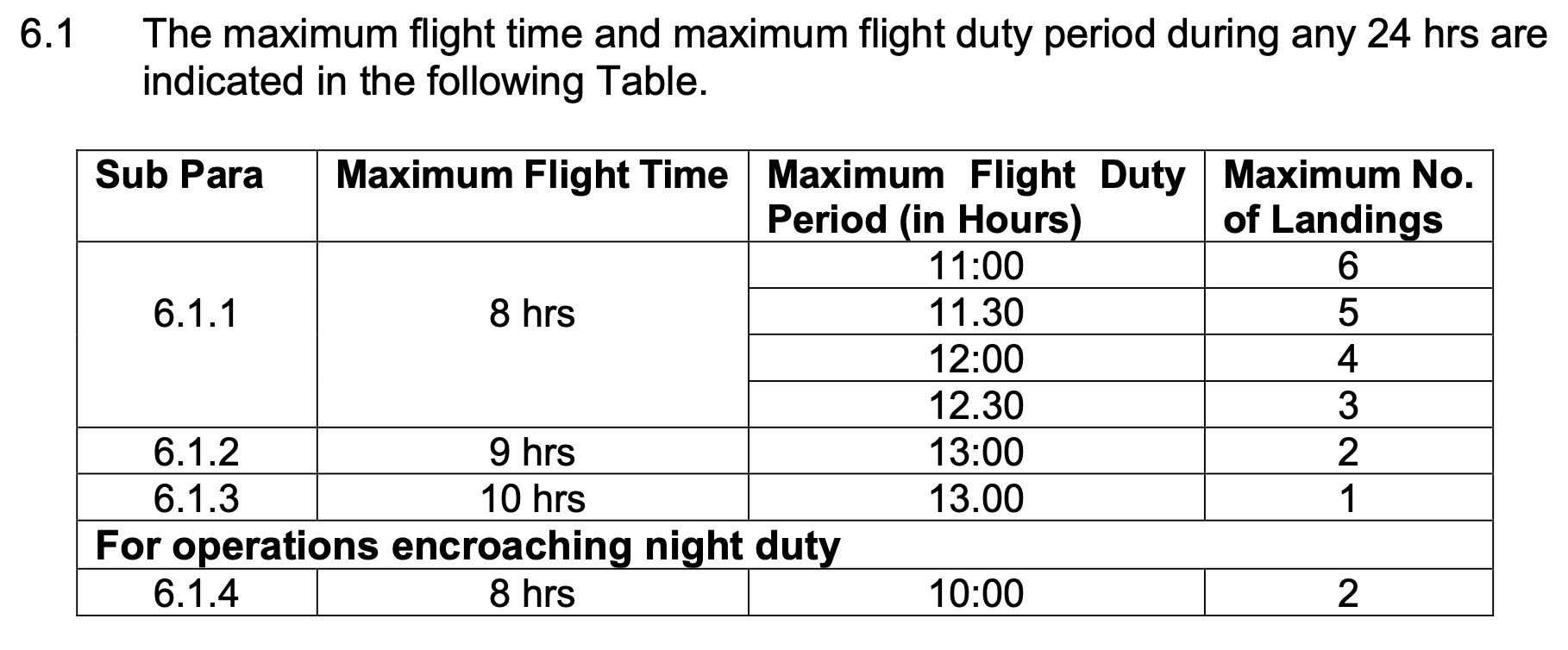
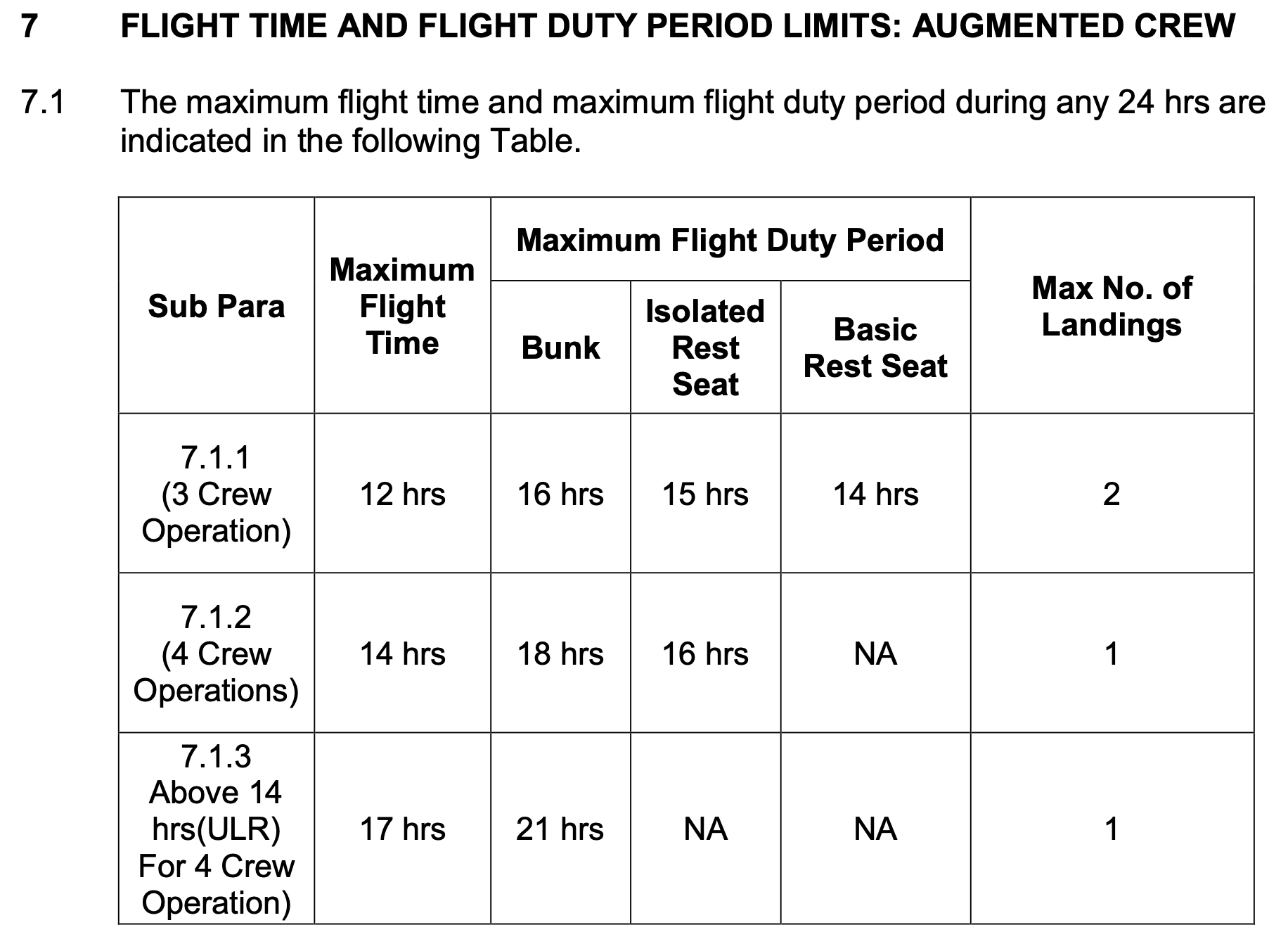
Further,
The minimum in-flight rest period shall be a consecutive 90 minutes period for each crew member and 2 consecutive hours for the flight crew members at control during landing.
Source: DGCA
There were clear limitations placed on how long the pilot and the crew could be asked to work, and further, the duration of rest that needs to be provided thereafter. The document is pretty coherent and well thought out; you can check the link in the source quoted above.
All the people working inside a plane have to be ready to jump into action in the event of any mishap. Their alertness is subject to their mind and bodies being well-rested. The revised document was published on the 8th January 2024.
The leadership did not care what the circular said and assumed that everything would be fine. Worst-case, they would not comply, pay a fine and move on.
In some ways, they have managed not to even pay the fine by manufacturing this chaos! *Slow-Clap*
Indigo the Efficiency Machine
Indigo has been one of the consistently profitable airlines in the Indian aviation industry. It has made money by running its operations like a machine.
It achieved this by doing a number of things. Till a few years ago, it ran a fleet that was exclusively Airbus 320s, which enabled standardisation as well as speedy solutions to any maintenance problems. The ground staff did not have to deal with different types of planes. They also flew the Airbus like a bus.
The plane lands, it is turned around in 45 minutes, passengers start boarding, and it takes off. The plane rarely spends more than 75 minutes on the ground. I would argue that most buses get more downtime. This was a model that was perfected into an art by Southwest Airlines in the US, which allowed them to rise incredibly fast.
On Flightradar, you can see how any aircraft is run around the country.
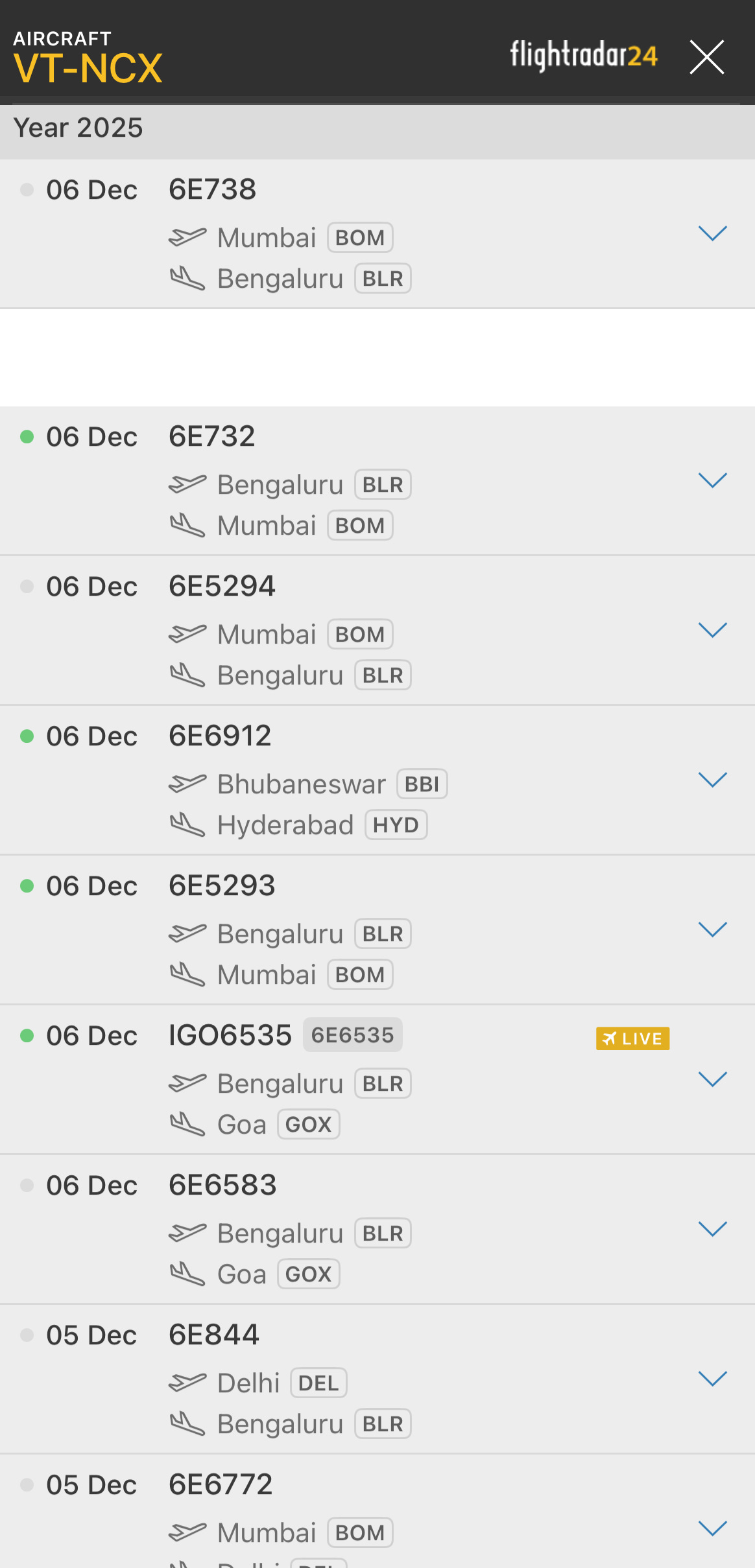
This equipment (VT-NCX), for instance, is expected to fly 7 flights on the 6th Dec.
Every company aspires to achieve 100% utilisation since a lower utilisation is seen as inefficiency.
On a road, if you were to achieve 100% utilisation, you would want every square meter of the road to be occupied by a car. Commoners refer to this as a Traffic Jam. If every square meter of road is occupied, where will the cars go? This is exactly why you need some slack in the system. You need systems to have optimal utilisation rates and not the highest possible utilisation.
Poor people do not have any slack in their finances; this is what keeps them poor. Their utilisation rate of money earned borders on 100%.
When your operations are aspiring for the highest levels of utilisation, a slight deviation from that can cause the entire operation to fall apart. We saw this happen during COVID when shipping lanes went into a tizzy.
But when that operation involves people, even those people have to run like machines. Here enters the FDTL.
Live by the sword, die by the sword
~ Matthew 26:52
In the case of Indigo, that sword was utilisation.
The point to ponder here is that Indigo’s consistent profits were a result of staff who worked 12-hour shifts without fail. The government asked the airline to provide them with slightly more rest, and the company is falling apart.
We rarely acknowledge that what every company calls profits is essentially the accumulation of all the negative externalities that they dish out to the world. In this case, the externalities were being borne by their flight staff.
It seems like the profits of every company are their net debt to society.